
Sweden continues to outperform much larger economies when it comes to startup creation, venture capital activity, and global tech influence. Over the past decade, the country has built one of Europe’s most mature innovation ecosystems, producing globally recognized companies across fintech, gaming, climate tech, SaaS, health technology, and artificial intelligence.
What makes Sweden especially interesting in 2026 is the shift from pure growth-focused startups toward sustainable, profitable, and globally scalable businesses. Investors are becoming more selective, founders are prioritizing operational efficiency, and AI adoption is changing how Swedish startups compete internationally.
The startup scene is no longer limited to Stockholm alone. Cities like Gothenburg, Malmö, Lund, and Uppsala are producing specialized startups connected to mobility, clean energy, biotech, and advanced software development. Government-backed innovation programs, strong digital infrastructure, and early technology adoption continue to attract founders and investors from across Europe.
This guide covers the latest Sweden startup news, emerging industries, funding patterns, top startups to watch, investment trends, and the deeper forces shaping the Swedish tech economy in 2026.
Why Sweden Remains One of Europe’s Strongest Startup Hubs
Sweden has consistently ranked among Europe’s leading innovation economies. Despite its relatively small population, the country has produced a remarkable number of billion-dollar startups and globally recognized technology companies.
Several factors continue to support Sweden’s startup growth:
- High digital adoption rates
- Strong engineering education
- Government-backed innovation support
- Early internet and mobile penetration
- English fluency among founders
- Mature venture capital ecosystem
- Collaboration between universities and private industry
Stockholm is often described as one of the highest unicorn-producing cities per capita globally. Companies like Spotify, Klarna, and King helped establish Sweden’s international tech reputation.
The next generation of Swedish startups is now focusing heavily on AI infrastructure, climate technology, fintech compliance, enterprise automation, battery innovation, and sustainable manufacturing.
This evolution reflects broader changes in the European startup market, where profitability, regulation readiness, and long-term resilience matter more than aggressive hypergrowth alone.
Stockholm Continues to Lead Sweden’s Startup Economy
The Capital’s Expanding Tech Ecosystem
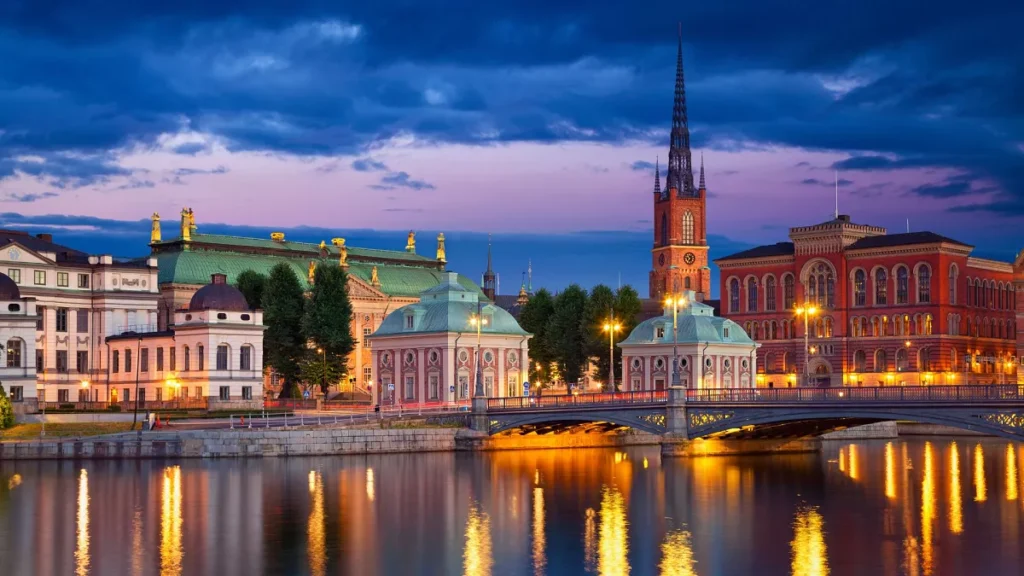
Stockholm remains the center of Swedish venture capital activity and startup acceleration. Most major funding rounds, accelerator programs, and international tech events still originate from the capital.
Stockholm attracts founders because of its dense network of:
- Venture capital firms
- Startup incubators
- Angel investors
- Enterprise partnerships
- Skilled software engineers
- International talent
The city also benefits from strong public transportation, digital-first government services, and a business-friendly environment that supports rapid company formation.
Many Swedish AI startups are now building products around enterprise automation, workflow optimization, cybersecurity intelligence, and predictive analytics. Investors in Stockholm are particularly interested in startups that can apply AI to traditional industries such as banking, manufacturing, healthcare, and logistics.
Key Startup Districts in Stockholm
Several areas within Stockholm have become known for startup concentration and innovation activity:
| Area | Startup Focus |
|---|---|
| Södermalm | Consumer apps, fintech, SaaS |
| Kista Science City | Deep tech, telecom, AI |
| Norrmalm | Venture capital and scaleups |
| Hagastaden | Health tech and biotech |
This geographic clustering has helped create stronger founder networks and easier collaboration between startups and investors.
Sweden’s Biggest Startup Sectors in 2026
AI and Automation Startups
Artificial intelligence has become Sweden’s fastest-growing startup category. Swedish AI companies are focusing less on consumer chatbots and more on enterprise efficiency.
Popular AI startup areas include:
- AI-powered cybersecurity
- Workflow automation
- Industrial AI
- Predictive maintenance
- AI-driven compliance systems
- Medical diagnostics
- Customer support automation
Many Swedish AI founders are former engineers from large tech firms and research universities. This technical expertise has helped local startups compete internationally despite growing global competition.
Enterprise AI adoption across Scandinavia is also creating a strong regional customer base for Swedish software startups.
Climate Tech and Green Energy
Climate technology remains one of Sweden’s strongest innovation sectors. Investors continue backing startups working on carbon reduction, renewable energy, electric mobility, battery technology, and industrial sustainability.
Sweden’s climate tech ecosystem benefits from:
- Strong environmental policies
- Public support for green innovation
- Industrial partnerships
- Access to renewable energy infrastructure
- European sustainability funding
Battery manufacturing and electrification startups have seen especially strong investment interest due to Europe’s push for energy independence and sustainable transportation.
Startups connected to circular economy models, carbon accounting software, and green industrial processes are also attracting large enterprise partnerships.
Fintech Still Drives Major Investment
Swedish fintech remains highly influential across Europe. The success of Klarna helped establish Sweden as a fintech innovation leader, and many newer startups are now focusing on infrastructure rather than consumer lending alone.
Emerging fintech categories include:
- Embedded finance
- Open banking APIs
- Fraud prevention
- B2B payments
- Regulatory technology
- Cross-border payment systems
- Financial automation platforms
Investors now prefer fintech startups with sustainable revenue models and lower regulatory exposure compared to earlier generations of aggressive consumer-finance companies.
The rise of digital banking across Europe continues to create strong opportunities for Swedish fintech founders building infrastructure products.
Gaming and Creative Technology

Sweden remains a global force in gaming technology. The country’s gaming industry produces internationally successful developers, publishing companies, and gaming infrastructure providers.
New gaming startups are increasingly combining:
- AI-generated gaming assets
- Cloud gaming infrastructure
- Multiplayer optimization
- Creator economy tools
- Streaming integrations
- VR and AR experiences
Swedish gaming founders benefit from a long-established ecosystem that includes experienced developers, gaming communities, and international publishing relationships.
The sector continues attracting investment because gaming revenues remain resilient even during broader economic slowdowns.
Venture Capital Trends in Sweden
Investors Are More Selective in 2026
The Swedish investment landscape has changed significantly compared to the aggressive funding years between 2020 and 2022.
Investors now prioritize:
- Revenue efficiency
- Sustainable growth
- Strong unit economics
- AI differentiation
- Regulatory readiness
- International scalability
- Experienced leadership teams
Startups that previously relied heavily on rapid expansion are now restructuring toward profitability and operational discipline.
This has created healthier market conditions overall, even though early-stage fundraising has become more competitive.
International Capital Is Still Flowing Into Sweden
Despite slower global venture funding activity, Sweden continues attracting international investors from:
- The United States
- Germany
- The United Kingdom
- Singapore
- The Netherlands
International firms remain interested because Swedish startups often combine strong engineering quality with lower operating costs compared to Silicon Valley.
European sovereign funds and institutional investors are also increasing exposure to Nordic technology companies, particularly in climate tech and industrial AI.
Sweden Startup News: Companies to Watch
Several Swedish startups are generating significant attention in 2026 due to their rapid growth and market positioning.
| Startup Sector | Growth Area |
|---|---|
| AI SaaS | Enterprise productivity |
| Climate Tech | Battery innovation |
| Fintech | Embedded finance |
| Health Tech | Digital diagnostics |
| Mobility | Electric transport systems |
| Cybersecurity | AI threat detection |
Many of these companies remain private, but analysts expect multiple Swedish scaleups to pursue IPOs or major acquisitions over the next few years.
Industry experts are watching closely for the next wave of Swedish unicorns emerging outside traditional fintech.
Government Support and Innovation Programs

Sweden’s public sector continues playing an important role in startup growth through grants, incubators, and research partnerships.
Organizations supporting innovation include:
- Vinnova
- Business Sweden
- Almi
These organizations help startups with:
- Research funding
- International expansion
- Investor access
- Export guidance
- Innovation partnerships
Sweden’s close connection between universities and startups also helps commercialize research faster than in many other European markets.
Challenges Facing Swedish Startups
Despite strong momentum, Swedish startups still face several structural challenges.
Talent Competition
Competition for experienced software engineers and AI specialists has intensified across Europe. Swedish startups increasingly compete against international employers offering remote positions with higher salaries.
Scaling Beyond the Nordic Market
Many startups succeed regionally but struggle when entering larger markets like the United States or Asia. International expansion requires larger sales teams, localized compliance expertise, and stronger operational infrastructure.
Higher Capital Efficiency Expectations
Investors are demanding clearer profitability timelines. Startups that depend heavily on continuous funding rounds are finding it harder to secure late-stage capital.
This shift is pushing founders toward leaner operational models and stronger financial discipline.
What Makes Sweden Different From Other European Startup Markets
Sweden’s startup culture differs from many European ecosystems because founders tend to focus on:
- Global scalability from day one
- Product quality
- Long-term sustainability
- Technical depth
- User experience
- Operational efficiency
Swedish startups also benefit from strong trust-based business culture and early adoption of digital technologies.
Compared to some larger European markets, Swedish founders often move faster when testing new software products and entering international markets.
This combination of technical talent and global ambition continues to make Sweden one of Europe’s most influential innovation economies.
Future Outlook for Sweden’s Startup Ecosystem
The next phase of Sweden’s startup ecosystem will likely center around:
- Industrial AI
- Climate infrastructure
- Enterprise software
- Energy transition technology
- Health diagnostics
- Defense technology
- Advanced manufacturing systems
Swedish startups are increasingly building infrastructure-level technology instead of purely consumer-focused applications. This reflects broader investor demand for resilient business models and long-term enterprise value.
As Europe continues investing heavily in technological independence and sustainable industry, Sweden is positioned to remain one of the continent’s most important startup markets.
The ecosystem’s biggest advantage may no longer be hype or rapid fundraising. Instead, it is Sweden’s ability to consistently produce technically strong companies with global relevance and disciplined execution.
FAQ Section
Why is Sweden known for startups?
Sweden has strong digital infrastructure, highly educated engineers, government-backed innovation programs, and a culture that supports technology adoption and entrepreneurship.
Which city is the startup capital of Sweden?
Stockholm is considered Sweden’s startup capital due to its concentration of venture capital firms, accelerators, and technology companies.
What are the biggest startup sectors in Sweden?
The largest sectors include fintech, AI, climate tech, gaming, SaaS, cybersecurity, and health technology.
Is Sweden good for tech investment?
Yes. Sweden remains one of Europe’s most attractive technology investment markets because of its engineering talent, startup maturity, and strong international scalability.
What are Sweden’s most famous startups?
Some of the country’s best-known startups include Spotify, Klarna, King, and iZettle.
Is AI growing in Sweden?
Yes. AI startups are among the fastest-growing companies in Sweden, particularly in enterprise software, industrial automation, cybersecurity, and healthcare applications.