The bearish pennant is one of the most powerful continuation patterns in technical analysis. Traders widely use it to identify potential downward breakouts in trending markets. The pattern appears after a strong price drop, followed by a brief consolidation before another downward move.
Understanding the bearish pennant can help traders improve timing, reduce risk, and identify high-probability short-selling opportunities. In this guide, you will learn how the pattern forms, how to trade it effectively, and what mistakes to avoid. Whether you are a beginner or an experienced trader, mastering this concept can significantly enhance your technical analysis skills.
What is a Bearish Pennant Pattern in Trading?
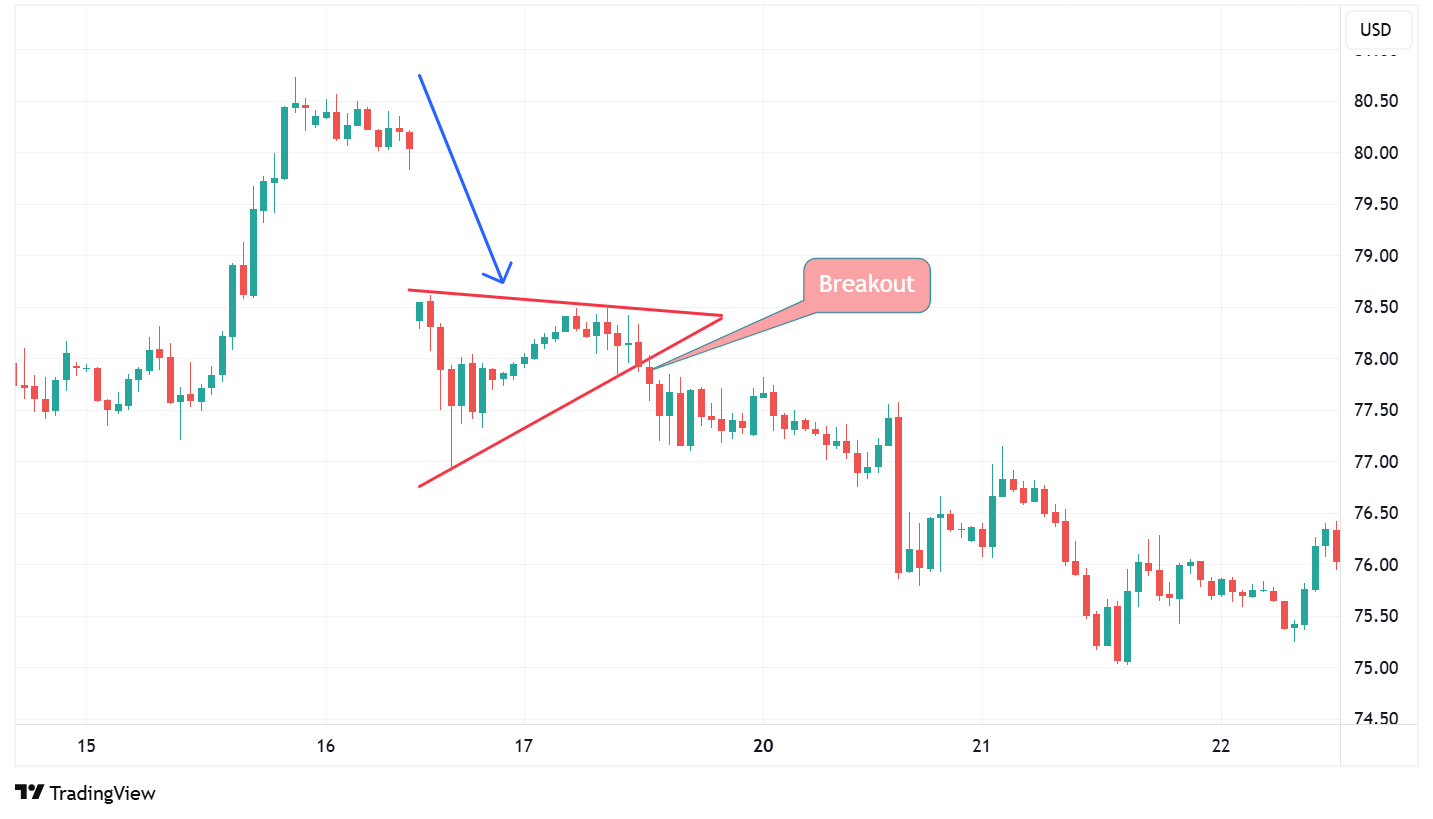
A bearish pennant is a continuation chart pattern that signals the potential continuation of a strong downtrend. It forms after a sharp price decline (called the flagpole), followed by a small symmetrical triangle consolidation.
A bearish pennant typically indicates that sellers are temporarily pausing before continuing downward pressure. This pattern is commonly observed in stocks, forex, and cryptocurrency markets.
The structure of a bearish pennant includes:
- A strong downward move (flagpole)
- A consolidation phase with converging trendlines
- A breakout in the downward direction
Traders closely watch the breakout point because it often signals a high-probability entry opportunity.
The bearish pennant is considered more reliable when it forms during high volume selling pressure. It reflects temporary market indecision before the continuation of bearish momentum.
Formation and Psychology Behind Bearish Pennant Pattern
The bearish pennant forms due to a clear shift in market psychology. After a strong sell-off, buyers attempt to stabilize the price temporarily. However, sellers remain dominant in the market.
During this phase, price action narrows into a small triangle. This represents indecision between buyers and sellers. However, the underlying trend remains bearish.
The formation process includes:
- Sharp decline: Sellers push the price down aggressively.
- Consolidation: Buyers try to recover, but momentum is weak.
- Compression: Price tightens into a triangle shape.
- Breakout: Sellers regain control and push price lower.
The bearish pennant reflects a “pause before continuation.” It shows that the market is not reversing but preparing for another downward movement.
Understanding this psychology helps traders avoid false expectations of reversal during consolidation phases. Instead, they can prepare for continuation trades with better timing and confirmation signals.
How to Trade the Bearish Pennant Pattern Effectively
Trading the bearish pennant requires patience, confirmation, and proper risk management. Entering too early can lead to false breakouts, while late entries reduce profit potential.
Here is a structured approach:
1. Identify the Flagpole
Look for a strong and rapid price decline. This confirms seller dominance and sets the foundation for the pattern.
2. Wait for Consolidation
Price should move sideways in a tightening triangle. This is where the bearish pennant develops.
3. Confirm the Breakout
A valid bearish pennant breakout occurs when price breaks below the lower trendline with increased volume.
4. Entry Strategy
Enter after confirmation of breakdown. Conservative traders wait for a retest of the broken support level.
5. Stop Loss Placement
Place stop-loss just above the upper trendline of the pennant to reduce risk.
6. Profit Target
Measure the flagpole height and project it downward from the breakout point.
The bearish pennant works best in strong trending markets. Traders often combine it with RSI or moving averages for additional confirmation.
Common Mistakes When Trading Bearish Pennant Pattern
Many traders misinterpret the bearish pennant, leading to poor trade execution. Avoiding these mistakes can significantly improve success rates.
1. Entering Before Breakout Confirmation
Jumping into trades during consolidation often results in losses. Always wait for confirmation.
2. Ignoring Volume
Low volume breakouts are unreliable. A true bearish pennant breakdown should show increased selling volume.
3. Confusing with Reversal Patterns
A bearish pennant is not a reversal signal. It is a continuation pattern.
4. Poor Risk Management
Not setting stop-loss levels can lead to large unexpected losses.
5. Emotional Trading
Fear of missing out often causes early entries. Discipline is essential when trading the bearish pennant.
Avoiding these mistakes can help traders use the pattern more effectively and consistently.
Bearish Pennant vs Other Chart Patterns
The bearish pennant is often compared with other continuation patterns like flags and wedges. While they share similarities, there are key differences.
Bearish Pennant vs Bearish Flag
- Pennant forms a triangle shape
- Flag forms a rectangular channel
- Both indicate continuation but structure differs
Bearish Pennant vs Falling Wedge
- Falling wedge often signals reversal
- Bearish pennant signals continuation
Reliability Factors
The bearish pennant is more reliable when:
- Market is in a strong downtrend
- Volume increases during breakout
- Consolidation period is short
Understanding these differences helps traders avoid misinterpretation and improve trade accuracy when using the bearish pennant.
FAQs About Bearish Pennant Pattern
1. What does a bearish pennant indicate?
It indicates continuation of a strong downtrend after a short consolidation phase.
2. How reliable is the bearish pennant pattern?
The bearish pennant is highly reliable in strong trending markets, especially when confirmed with volume.
3. Can the bearish pennant fail?
Yes, false breakouts can occur if volume is weak or market conditions are uncertain.
4. What timeframe works best for bearish pennant?
It works on all timeframes, but higher timeframes generally provide stronger signals.
5. Is bearish pennant good for beginners?
Yes, but beginners should practice with demo trading before using real capital.
Conclusion
The bearish pennant is a powerful continuation pattern that helps traders identify potential downward breakouts with high accuracy. By understanding its structure, formation psychology, and trading strategy, you can significantly improve your technical analysis skills.
However, success with the bearish pennant depends on patience, confirmation, and disciplined risk management. Avoid rushing into trades and always wait for a proper breakout signal supported by volume.
With consistent practice, this pattern can become a valuable tool in your trading strategy and help you make more informed decisions in volatile markets. Start applying these concepts today to refine your trading performance and build stronger market confidence.